02Amazon Business · Case Study
Preferred Brand Recommendation Ads
Helping business customers make faster purchasing decisions through sponsored brand recommendations integrated into the procurement workflow.
01 — Context
Advertising inside enterprise procurement.
The Amazon Business Ads team improves advertising experiences for business shoppers while balancing enterprise purchasing workflows and advertiser visibility. Amazon Business is Amazon's B2B ecommerce platform — 7M+ customer accounts across 9 global markets — built to simplify complex procurement workflows and improve purchasing consistency across teams.
My impact
- Reframed the problem space
- Led qualitative research to uncover enterprise purchasing behaviors and pain points
- Drove cross-functional alignment and execution
02 — The Opportunity
Preferred brands worked — but almost nobody used them.
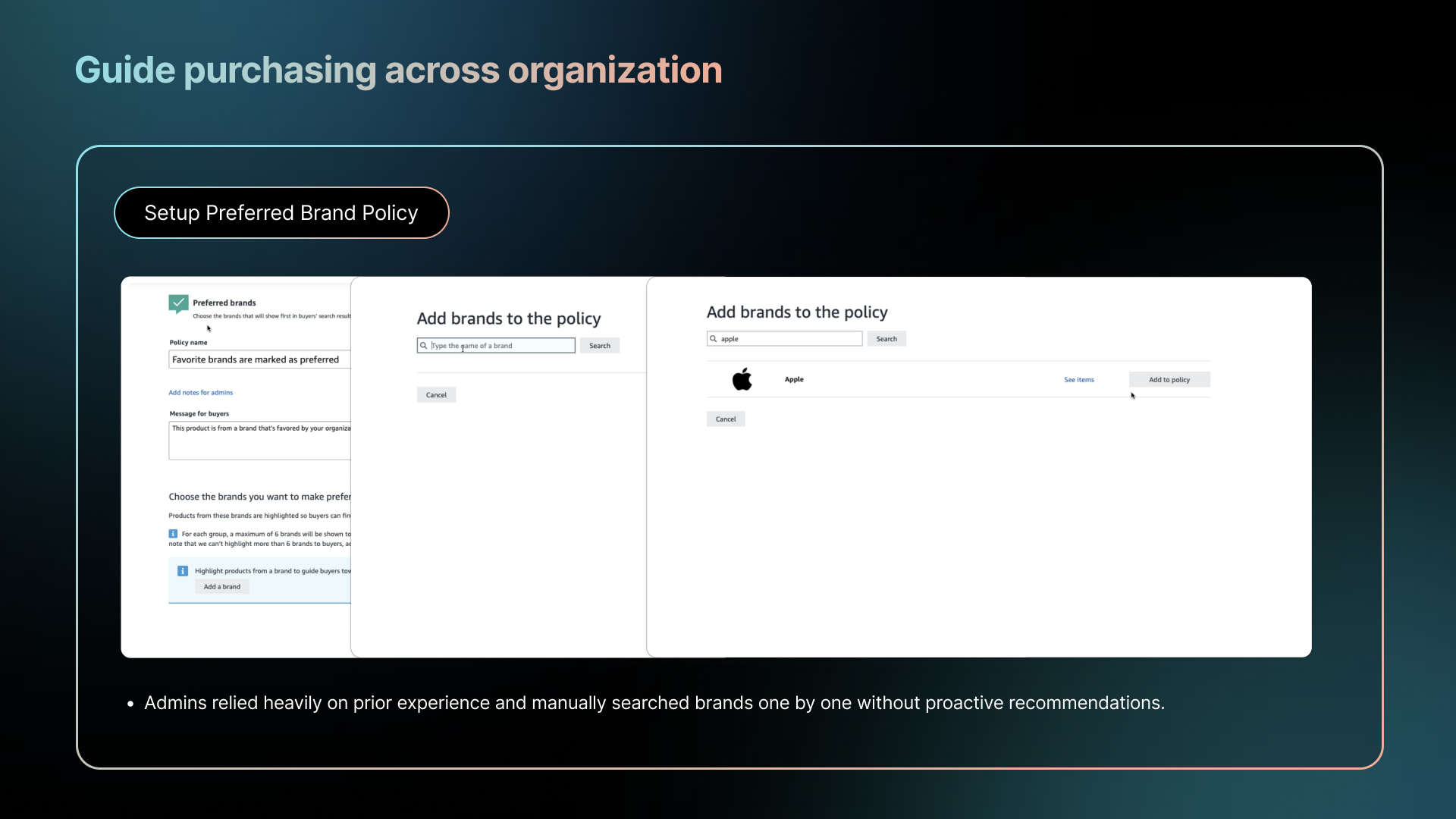
Setting up a Preferred Brand policy was the bottleneck: admins relied heavily on prior experience and manually searched brands one by one, with no proactive recommendations.
03 — The Hypothesis
Sponsored brand recommendations
Could help buyers discover relevant brands more efficiently — and increase preferred brand adoption during procurement setup.
But the initial assumption raised open questions we couldn't answer yet:
04 — Research
Ten business buyer interviews, three themes.
Individual buyers, procurement managers, and often multiple stakeholders at once.
Prior experience, organizational guidance, and vendor reputation.
Business-specific attributes, procurement fit, reliability and support.
Key insight
Business buyers needed better guidance, richer business context, and faster ways to evaluate brands during policy setup.
05 — Proposal 1.0
A rich brand recommendation experience.
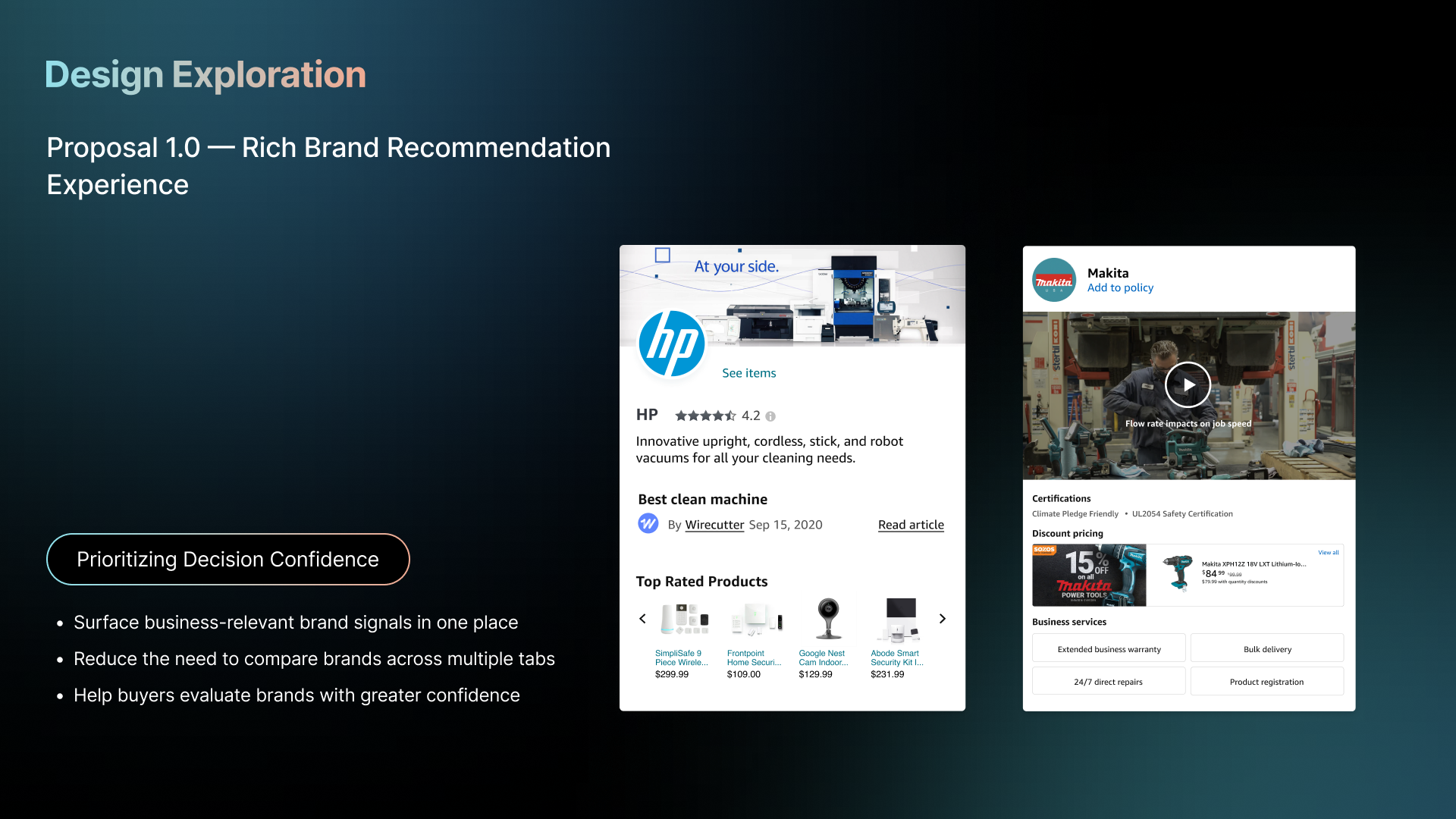
The first proposal prioritized decision confidence: surface business-relevant brand signals in one place, reduce the need to compare brands across multiple tabs, and help buyers evaluate brands with greater confidence.
06 — Going Deeper
The open question
Business customers need more information — but which signals actually drive purchasing decisions?
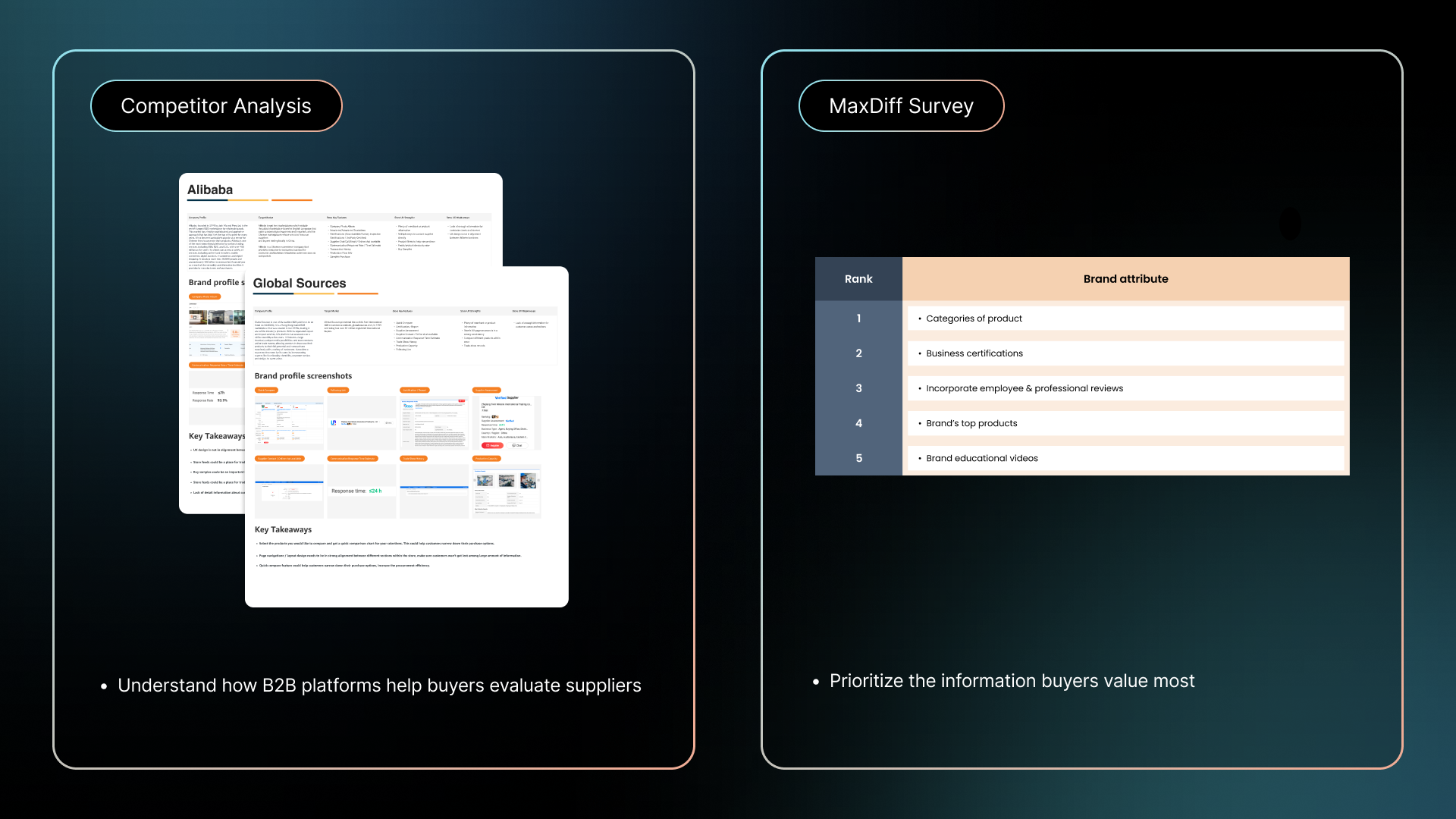
To answer it, I ran a competitor analysis of B2B platforms (Alibaba, Global Sources) to understand how they help buyers evaluate suppliers, and a MaxDiff survey to rank which brand attributes buyers value most. The winners: product categories, business certifications, employee and professional reviews, a brand's top products, and brand educational videos.
07 — Proposal 2.0
Decision-oriented brand recommendations.
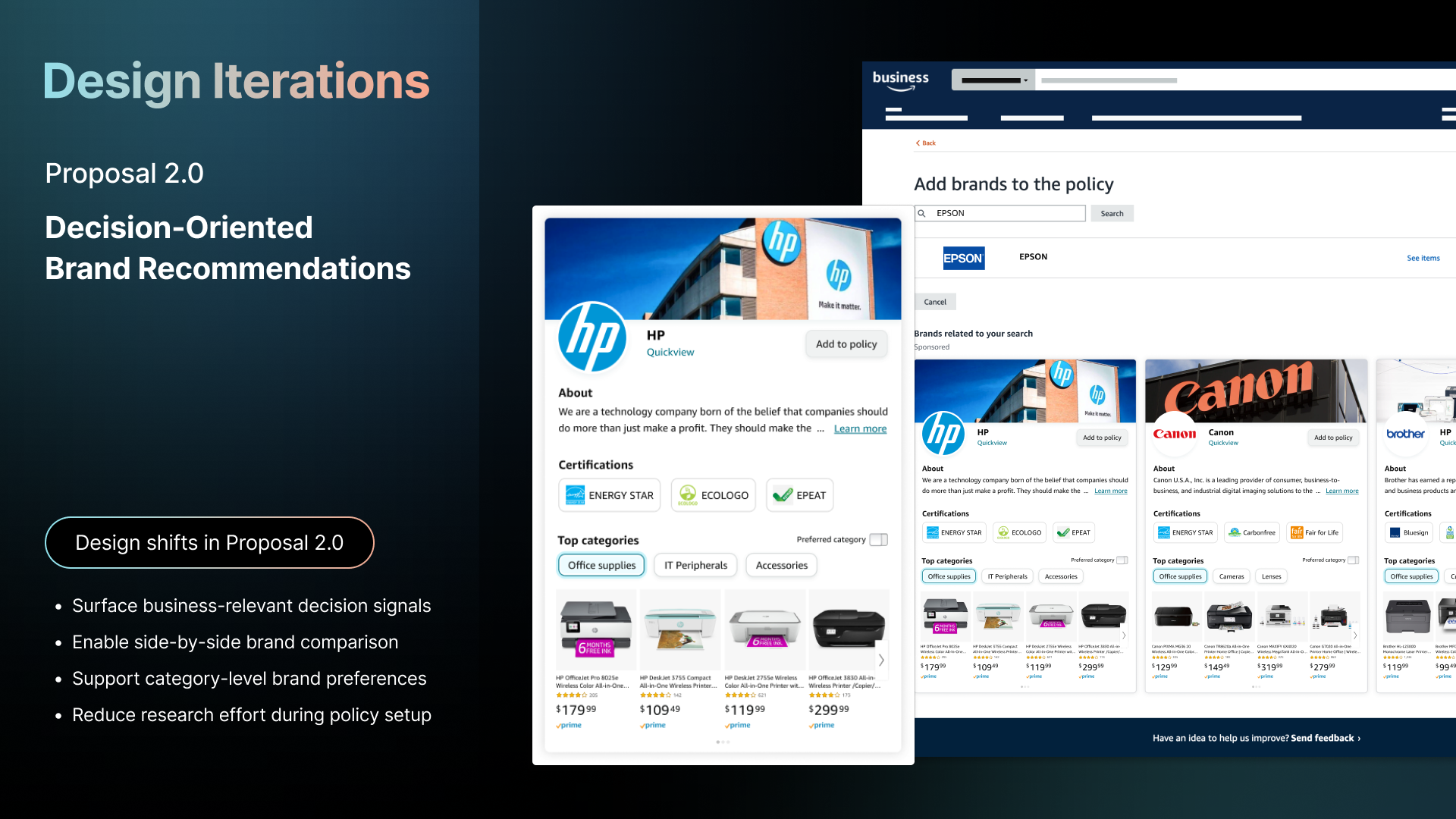
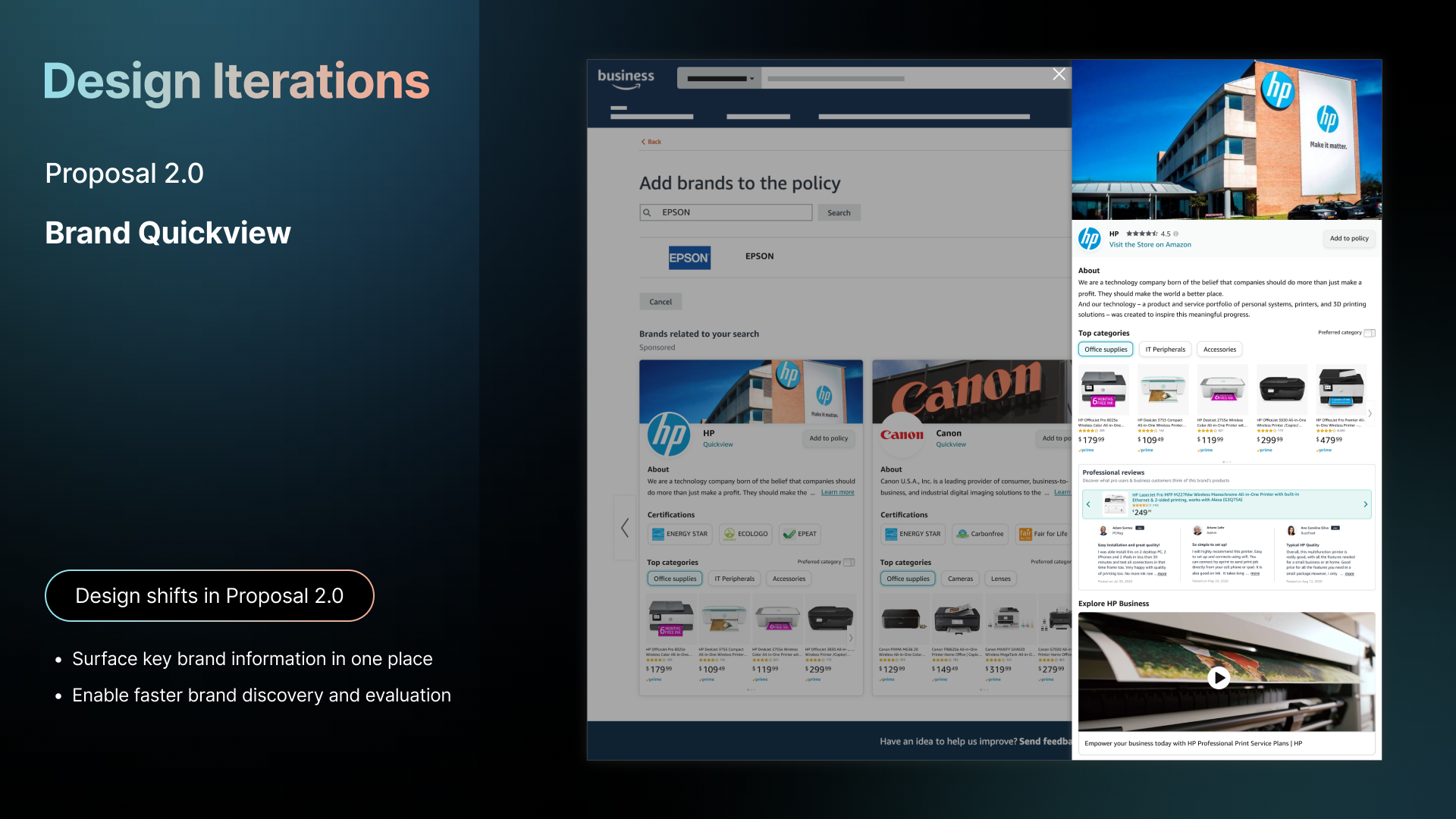
The final design shifted from "rich" to "decision-oriented": surface business-relevant decision signals, enable side-by-side brand comparison, support category-level brand preferences, and reduce research effort during policy setup.
Brand Quickview
A lightweight overlay that surfaces key brand information in one place — enabling faster brand discovery and evaluation without leaving the policy setup flow.
08 — Early Results
Piloted with US business customers.
The experience rolled out to a limited set of Amazon Business customers in the US, measured on recommendation engagement, Brand Quickview usage, add-to-policy conversion, and preferred brand policy adoption.
What's next
- Create a dedicated B2B Brand Store
- Surface business-specific brand information
- Better support enterprise purchasing decisions